
Homeowners often concentrate on insulation, windows and HVAC systems when trying to reduce energy bills. These are important factors, but roof ventilation is often ignored and contributes significantly to a home’s overall energy efficiency.
In Ontario, where homeowners face hot, humid summers and long, cold winters, proper roof ventilation is critical to ensuring a balanced attic environment year-round. A well-ventilated roof can help reduce cooling costs in the summer, avoid moisture problems in the winter and help your heating and cooling systems work more efficiently.
Understanding how roof ventilation works and why it is important can help homeowners make the right choices to improve comfort while reducing monthly utility bills.
What is Roof Ventilation? How Does it Work?
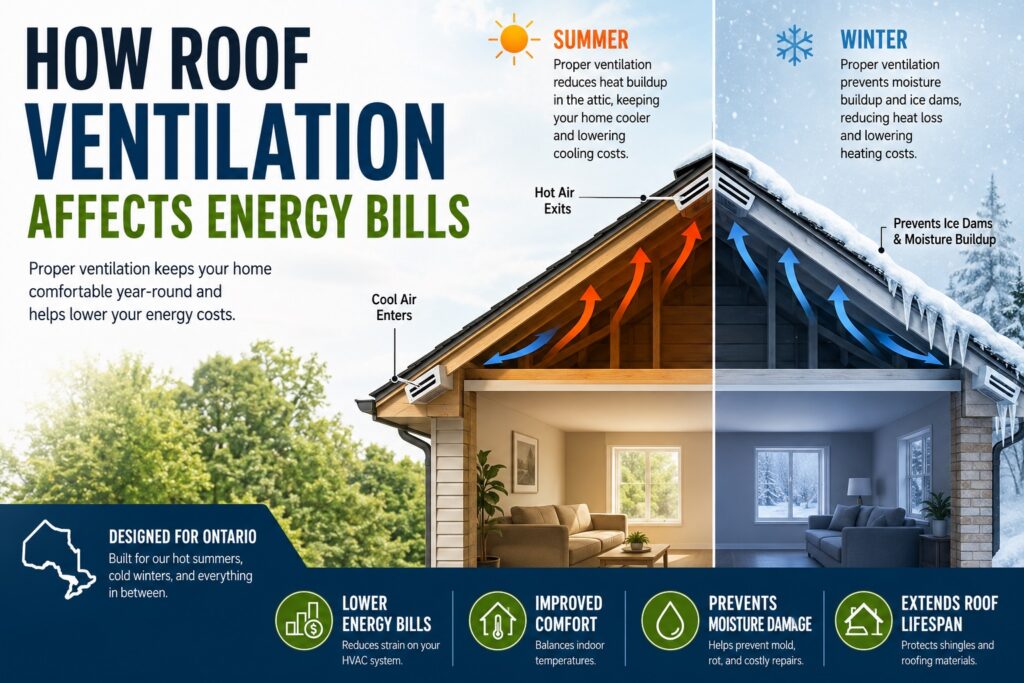
Roof ventilation is a system for circulating air through the attic. The goal is to vent warm, moist air out of the attic and allow fresh outdoor air in.
A typical roof ventilation system is made up of two main parts:
Air Intake Vents
Usually, the intake vents are in the soffits beneath the overhang of the roof. These vents allow cooler outside air to enter the attic space.
Exhaust Vents
Exhaust vents near the roof peak permit warm air to escape. Examples include ridge vents, roof vents and gable vents.
The intake and exhaust vents will function together to pull air in continuously. This balanced ventilation helps control attic temperatures and moisture throughout the year.
Poor Roof Ventilation Adds to Summer Cooling Costs
Ontario summer temperatures put a lot of strain on roofing systems. Attics with poor ventilation can be very hot, much hotter than the outside temperature.
Heat Accumulation in the Attic
Roofing materials absorb solar heat on sunny days. If there is not enough air flow, this heat gets stuck inside the attic.
As attic temperatures increase, heat radiates downward into living spaces. It is more difficult to keep the indoor temperature comfortable, especially in the upper floor rooms, where it is often noticeably warmer.
Increased Air Conditioner Load
When too much heat comes into the home, the air conditioning system has to work harder and run longer to keep the home at the desired temperature.
This means more work:
1. Increased use of electricity
2. Monthly utility bills increase higher
3. More wear and tear on HVAC equipment
4. Possibly shorter system life span
Typical Summer Ventilation Problems Symptoms
Homeowners may see a few warning signs, such as:
1. Second floor rooms unusually hot
2. Expensive cooling
3. Indoor stuffiness
4. Indoor humidity too high
If these symptoms are occurring even with a properly functioning air conditioner, poor attic ventilation could be a factor in the problem.
How Roof Ventilation Affects Ontario Winters’ Heating Cost
Many homeowners think roof ventilation is only important in the summer. In fact, good ventilation is as important during the cold Ontario winters.
Keeping the Attic from Getting Too Hot
Hot air rises naturally. If there are gaps in the insulation or air leaks that allow heated indoor air to enter the attic, attic temperatures increase.
This means that the heating system has to make up for the lost heat, which leads to higher energy consumption and higher heating costs.
Minimize Ice Dam Formation
Ice dams are a common winter roofing problem across Ontario.
They are formed when snow on the rooftop melts from attic heat. Water flows to the colder edges of the roof and refreezes, forming an ice dam.
Eventually, water can back up behind the ice dam and seep under the roofing materials.
Proper ventilation of the roof helps control the temperature in the attic, thereby reducing the conditions that can cause ice dams to form.
Improve Indoor Comfort
A balanced attic temperature helps to keep indoor temperatures more stable throughout the house. This reduces hot and cold spots and allows heating systems to run more efficiently.
Moisture & Condensation A Hidden Cost
Poor ventilation is not just an energy efficiency issue.
Moisture in the attic can lead to long-term problems, affecting both the home’s structure and its energy performance.
Why Moisture Accumulates
Moisture is generated indoors by everyday activities such as cooking, showering and laundry.
Some of this warm humid air naturally rises into the attic. Moisture gets trapped if there’s not enough ventilation.
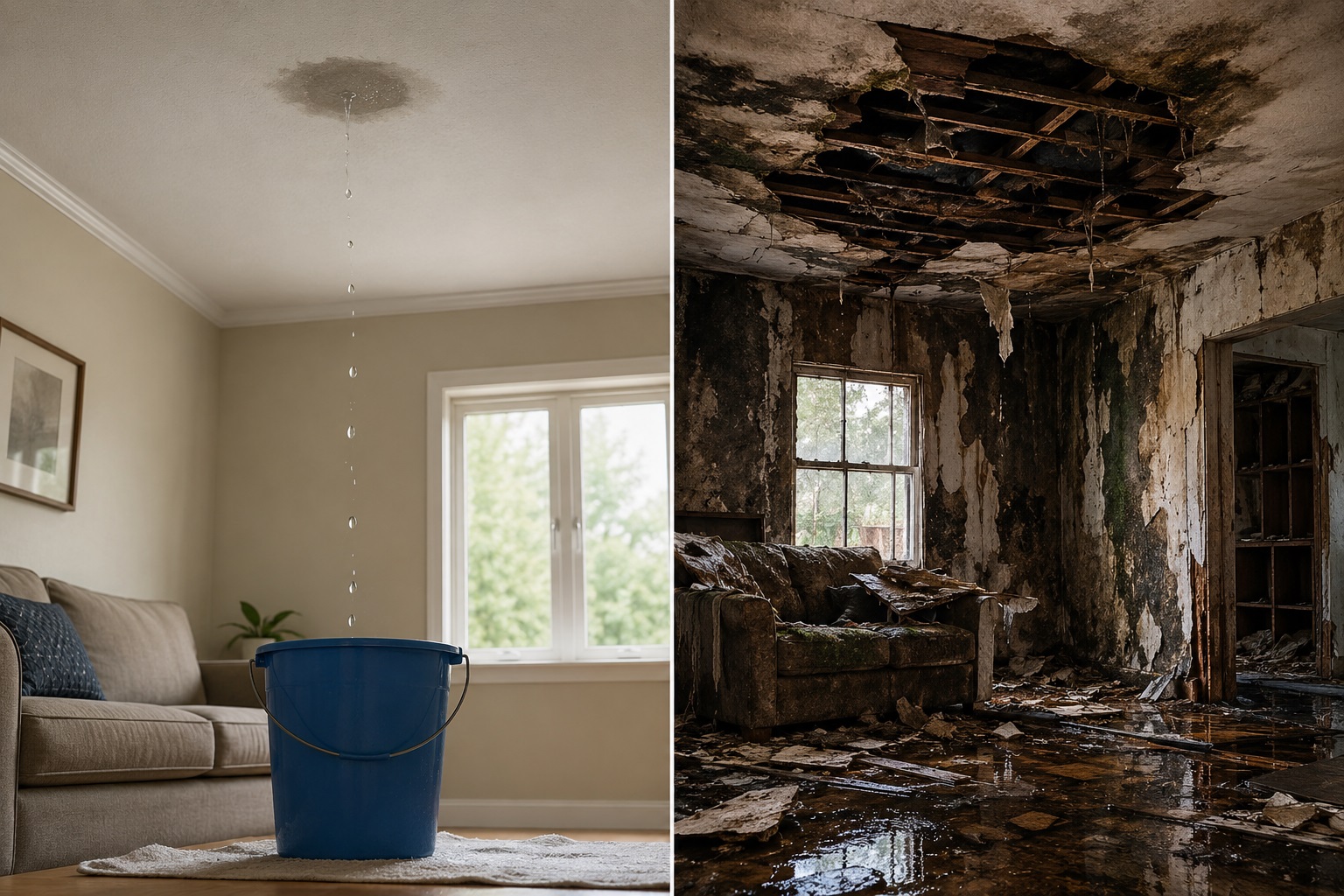
Possible Damage From Excess Moisture
Excess moisture over time can cause:
1. Mouldy growth
2. Damaged wood.
3. Damage to roof decking
4. Rusty hardware
5. Reduced Insulation Efficiency
Impacts on Energy Costs
Wet insulation can lose most of its insulating value. As insulation gets worse, more heat is lost in winter and more heat is gained in summer.
This leads to higher heating and cooling costs all year round.
Roof Ventilation & Attic Insulation: What’s the Link?
Roof ventilation and insulation are not the same but they complement each other to improve energy efficiency.
Insulation retards the transfer of heat from one living space to another, and ventilation carries off excess heat and moisture from the attic.
Why You Want Both
Moisture in the attic will prevent even the best insulation from performing at its peak.
Similarly, good ventilation is no substitute for poor insulation.
Homeowners must have both systems functioning well for optimal energy efficiency.
Mistakes to Avoid
Several issues commonly diminish the effectiveness of ventilation:
1. Soffit Vents Blocked by Insulation
2. Not enough air intake ventilation
3. Poor ventilation of exhaust
4. attic insulation installed improperly
Solving these problems can greatly improve attic performance.
Warning Signs Your Roof Ventilation Is Costing You Money
Roof ventilation problems usually develop gradually and are hard to detect in the early stages.
Look out for these common signs:
Sky High Energy Bills
Sudden jumps in your heating or cooling costs can be a sign of airflow problems in your attic.
Indoor Temperatures Not Steady
Rooms that are consistently hotter or colder than the rest of the house can be an indicator of a ventilation problem.
Winter Ice Dams
Recurring ice dams are often signs of temperature differences in the attic.
Too Much Moisture
Frost, condensation or damp insulation in the attic are warning signs not to be overlooked.
Mold or Stale Odors
Musty smells that linger could be a sign of moisture build-up and inadequate ventilation.
Early Roof Deterioration
Too much heat in the attic accelerates the deterioration of roofing and reduces roof life.
Best Roof Ventilation for Homes in Ontario
The best solution will depend on the design of the home, the structure of the roof and the existing ventilation system.
Ridge and Soffit Ventilation Systems
For many roofing professionals, ridge and soffit ventilation is one of the most effective options, as it creates continuous airflow throughout the attic.
Roof Ventilation (Static)
Such vents can work well if they are properly sized and located, and provide passive venting.
Powered attic vents
Fans (electric or solar) can help promote airflow in some cases but they must be properly installed or they can cause pressure imbalances.
Airflow by Solar Power
Solar attic ventilation systems are an energy-efficient option that can help improve attic airflow without adding to your electricity use.
How much can you save on energy bills with proper roof ventilation?
How much you save depends on a number of factors including:
1. House Size
2. Attic insulation level
3. Current ventilation conditions
4. HVAC system performance
5. Local Climate
Savings will vary from home to home, but proper ventilation is often a contributing factor to lower heating and cooling costs by avoiding unnecessary strain on HVAC systems.
Additional Long Term Benefits
Besides energy savings, homeowners may benefit from:
- Enhanced indoor comfort
- Longer life of roof
- Less moisture-related repairs
- Increased insulation performance
- Less mold growth risk
Is it Time to Check Your Roof Ventilation?
Ventilation problems are often hidden, so a professional inspection can help you identify problems before they become costly.
The roof ventilation inspection could comprise the following:
- Assessment of intake and exhaust vents
- Learn about attic ventilation
- Moisture and condensation testing
- Check insulation
- Blocked or damaged vents identification
Many Ontario homeowners prefer to have inspections performed prior to winter or after significant roofing work to confirm the system is functioning properly.
Final Thoughts
Beyond protecting roofing materials, roof ventilation does a lot more. It is an important component in controlling attic temperatures, moisture management and improving the overall energy efficiency.
Proper ventilation can help Ontario homeowners reduce summer cooling costs, minimize winter heating losses and prevent the risk of moisture damage and ice dams.
If your energy bills keep going up or if you’re having issues in your attic, taking a look at your attic ventilation system may show you ways to increase comfort, protect your roof, and save money in the long run.
Common Questions
Does roof ventilation really save you on your energy bills?
Yeah. Good roof ventilation can help moderate the temperature in your attic and reduce the strain on your heating and cooling appliances, which can help with energy costs.
How can you tell if your attic isn’t ventilated well?
Typical signs include high energy bills, hot upper floors, attic condensation, mold growth, ice dams and uneven indoor temperatures.
What is the best roof ventilation system for homes in Ontario?
A good combination of soffit vents and ridge vents is often considered one of the best ventilation systems for the Ontario climate.
Poor Roof Ventilation Can Lead To Ice Dams?
Yes, I am. Poor ventilation increases attic temperature which increases the likelihood of snow melting and refreezing along the edges of your roof.
How frequently should you inspect roofing ventilation?
Many roofing professionals recommend checking attic ventilation at least every few years or whenever you do any roofing work.
More vent openings do not mean better ventilation?
Not really. Good ventilation requires the proper balance between the amount of intake and exhaust air. Simply adding more vents might not solve the underlying problems.