
What Causes Roof Leaks?
Roof leaks can be attributed to a multitude of factors that can emerge over time. One of the primary causes is wear and tear, which is often a result of aging materials. As roofing materials deteriorate, they lose their protective properties, leading to vulnerabilities that can permit water intrusion. This situation is particularly acute for older roofs, which may have been installed using materials that have had a finite lifespan.
Severe weather conditions are another significant contributor to roof leaks. Extreme storms, heavy rainfall, snow accumulation, and hail can all compromise the integrity of a roof. For instance, high winds may dislodge shingles, and prolonged exposure to moisture can lead to rot or mold, further exacerbating the risk of leaks. Each roofing material reacts differently to harsh weather; therefore, understanding the susceptibility of specific roof types is essential.
Improper installation of roofing systems can also lead to leaks. When a roof is not correctly installed, particular seams and joints can remain unsealed, creating entry points for water. It is crucial for homeowners to engage qualified professionals during roof installation to ensure all components are fitted correctly. Additionally, maintenance neglect can play a significant role in developing leaks. Homeowners who fail to conduct regular inspections may miss early signs of damage, allowing minor issues to evolve into severe leaks.
Routine inspections and maintenance are vital in mitigating risk factors that contribute to roof leaks. Conducting periodic evaluations can help identify problems before they escalate, ensuring homeowners can take preventive action when necessary. By staying proactive with roof care, the likelihood of unexpected leaks can be reduced significantly. Ultimately, being aware of these causes is the first step in safeguarding one’s home from potential water damage.
Identifying the Signs of a Roof Leak
Detecting a roof leak early can save homeowners from extensive damage and costly repairs. There are several signs both inside and outside the home that indicate a potential roof leak is developing. Recognizing these symptoms is crucial for timely intervention.
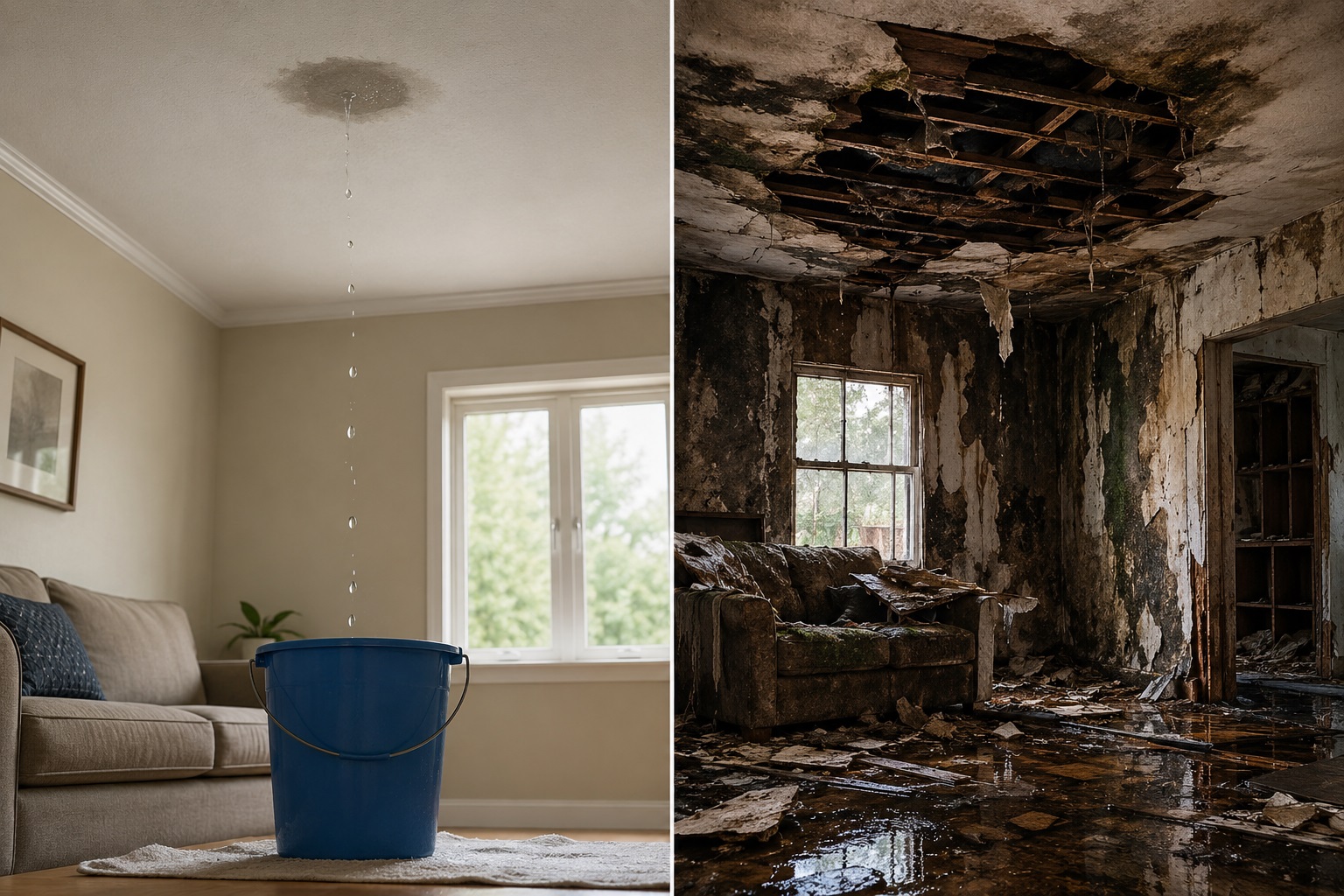
Internally, homeowners should be vigilant about water stains on ceilings or walls. These discolorations, often appearing as yellow-brown blotches, are typically caused by water infiltration, suggesting a leak above. Additionally, mold growth in areas such as bathrooms or kitchens may signal prolonged moisture exposure, an indirect indicator of a roof leak. Other signs to watch for include sagging ceilings or walls, which can occur when water collects and adds weight to structural materials.
On the exterior, several indicators can point to a compromised roof. Homeowners should regularly inspect their roofs for missing or damaged shingles, which can leave underlying materials exposed to weather elements. Granule loss is another sign that often accompanies asphalt shingles as they age; noticing granules in gutters or around the base of the home can suggest significant wear. Moreover, metal flashings around chimneys and vents should also be examined for rust or separation, as these issues can lead to leaks as well.
For an initial assessment, homeowners should conduct a thorough visual inspection of their roof, preferably after heavy rain or strong winds, as these conditions can amplify the visibility of leaks. Using binoculars can help spot potential problem areas without requiring a ladder. If any signs of damage are identified during this evaluation, it is advisable to consult a roofing professional for a more detailed inspection and necessary repairs.
Immediate Risks Associated with Roof Leaks
Roof leaks pose significant immediate risks to homeowners, with potentially dire consequences if not addressed promptly. One of the most pressing concerns is structural damage. When water seeps through the roof, it can compromise the integrity of the roof structure, leading to sagging ceilings, weakened beams, and even structural failures. Over time, continued exposure to moisture can result in extensive and costly repairs, and in the worst-case scenario, the failure of the entire roofing system may necessitate a complete replacement.
Another critical risk associated with roof leaks is the heightened possibility of electrical hazards. Water infiltrating through the roof can come into contact with electrical wiring, increasing the chances of short circuits, electrical fires, and other dangerous situations. Homeowners should be especially vigilant in ensuring that leaks in proximity to electrical outlets, fixtures, or appliances are addressed immediately to prevent hazardous outcomes.
Health-related risks also emerge as a significant concern when it comes to roof leaks. Moist environments created by water intrusion can foster mold growth, which poses serious respiratory issues for residents and can lead to allergies, asthma, and other health complications. Furthermore, the presence of mold can compromise indoor air quality, creating uncomfortable living conditions and potentially reducing property value. Understanding the risks associated with mold growth becomes increasingly essential to both the well-being of the household and the ongoing maintenance of the home.
The importance of immediate action cannot be overstated. Delaying the repair of a roof leak can exacerbate these risks, leading to more severe structural, electrical, and health problems and ultimately increasing repair costs. Homeowners must prioritize addressing roof leaks swiftly to safeguard their residences and, by extension, their health and finances.
How Silverhill Roofing Can Help You Address Roof Leaks
When faced with the urgency of a roof leak, homeowners require a prompt and efficient solution to mitigate potential damage. Silverhill Roofing specializes in emergency roof leak repair, offering a comprehensive suite of services that begin with thorough inspections. Their experienced team is trained to identify the source of leaks quickly, assessing both visible and hidden damage caused by the elements.
The process initiated by Silverhill Roofing typically starts with an in-depth evaluation of the roofing system. Professionals utilize advanced tools and techniques to pinpoint problem areas, ensuring that no potential source of water intrusion is overlooked. Following the inspection, they provide a detailed assessment report outlining necessary repairs along with a transparent cost estimate. This upfront approach facilitates informed decision-making for homeowners.
Timely repairs are critical in preventing further complications that roof leaks can cause, including structural damage and mold growth. Silverhill Roofing prioritizes rapid response times, ensuring that emergency calls are addressed promptly. Their skilled technicians are well-versed in a variety of roofing materials and are capable of executing quick fixes as well as more extensive repairs, depending on the severity of the leak.
Furthermore, Silverhill Roofing emphasizes customer satisfaction in all their services. From the initial consultation to project completion, they endeavor to maintain a professional relationship, keeping homeowners informed at every step of the repair process. By utilizing high-quality materials and employing best practices in installation and maintenance, Silverhill Roofing ensures durable solutions that mitigate future leak risks.
Overall, when faced with emergency roof leaks, it is essential for homeowners to seek professional assistance. Silverhill Roofing stands ready to provide expert guidance and effective repairs that not only address current issues but also help to safeguard homes against future vulnerabilities.